Skip to content

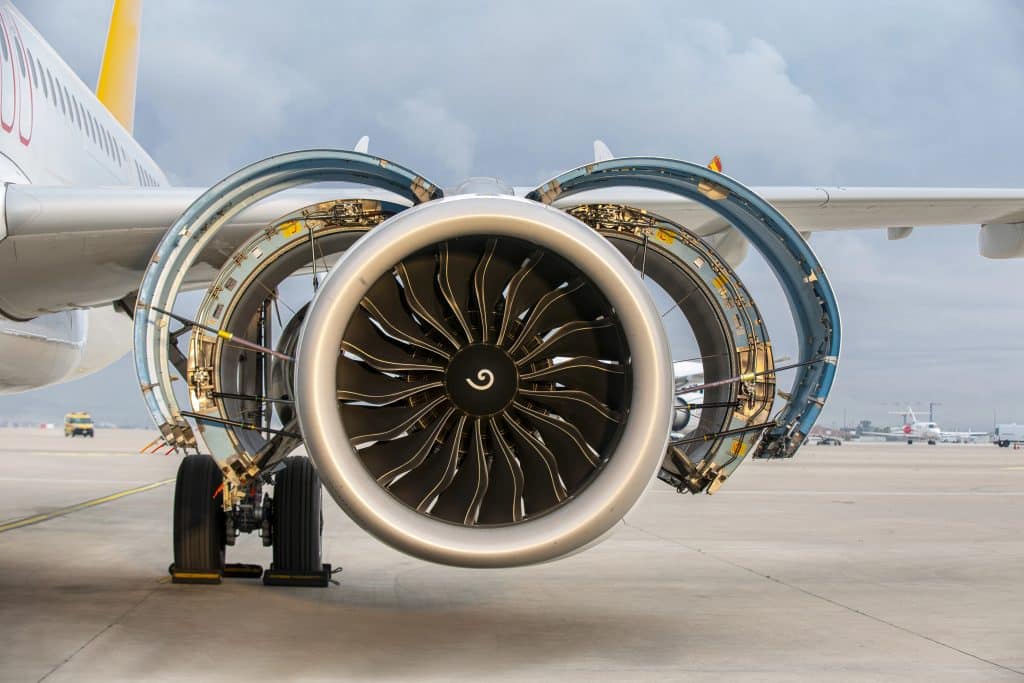
Aerospace and defense manufacturing asks more from a forming system than force, motion and tooling. The work carries heavier expectations: tighter process windows, specialized materials, repeatable results, controlled handling and equipment that can keep pace with long program lifecycles.
Parts may be large round, cylinders or rings, profiled, tapered, profiled and/or hollow. They may be made from costly alloys that leave little room for trial-and-error. They may need to move through several forming stages before they are ready for final machining, inspection or assembly.
Grotnes helps manufacturers build the production path around those realities.
With more than 125 years in circular and cylindrical metalforming, Grotnes designs equipment and automated systems for manufacturers that need dependable forming performance across aerospace, defense, space, energy and other high-specification markets. For aerospace and defense suppliers, it means developing a production process that respects the material, protects the part and supports the larger manufacturing mission of our customers.
Planning a new aerospace or defense production program?
Talk with Grotnes about the forming system behind the part.
Our Goal is Forming & Repeating the Part
For our customers in critical manufacturing, a successful first part is only the beginning. The greater test is producing the next part, and the next one after that, with the same control.
That challenge becomes harder when parts involve:
- Expensive alloys or specialty materials
- Large diameters or tall cylindrical forms
- Thin walls that can distort during forming
- Thick walls that need force to form
- Welded blanks that need sizing after fabrication
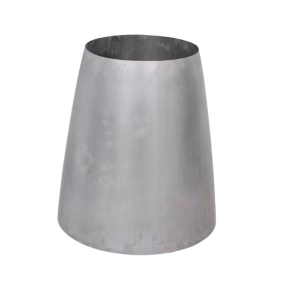
- Tapered or conical geometries
- Profiles that require controlled surface quality
- Heavy or awkward components that are difficult to handle manually
- Production schedules tied to long-term aerospace or defense programs
Grotnes equipment is built to help manufacturers take variability out of these forming operations. By combining the right metalforming technology with appropriate tooling, controls and automation, Grotnes helps customers create a more predictable path from raw form to production-ready component.
Four Core Technologies, One Production Mindset
Grotnes’ aerospace and defense value isn’t limited to a single forming method. Our core technologies give manufacturers several ways to solve circular, cylindrical and rotational part challenges.
Our technologies include:
Each serves a different purpose. In many applications, they’re strongest when considered together as part of a larger production sequence.
A part may need profile forming first, then sizing. Another may need diameter reduction after welding. Another may need a spun preform before final calibration. Another may require automated handling between stages because the part is too hot, too heavy or too sensitive for inconsistent manual loading.
Grotnes helps manufacturers evaluate that full process, and can recommend best steps during a thorough consultation prior to machine production.
Expanders: Bringing Internal Diameter, Roundness & Shape Under Control
Expanders are often used when a part must be formed or sized from the inside outward. For aerospace and defense manufacturers, this is especially valuable when a cylindrical, tubular or tapered component needs controlled internal diameter, improved roundness or calibrated geometry after an earlier forming or fabrication step.
Instead of relying on excessive machining to correct a part after forming, expansion can move the material closer to the required size and shape. That can help reduce material waste, shorten downstream work and improve consistency across production runs.
Grotnes expanders can be engineered for a wide range of part sizes, wall thicknesses and materials, including steel, stainless steel, aluminum, titanium and nickel-based aerospace alloys. Depending on the application, systems may include features such as position control, gauge mode, touchscreen operation, automatic lubrication, heated dies, water-cooled jaws, collapsible outer dies and automatic loading and unloading.
For aerospace and defense programs, the advantage is practical: form the part with more control before it reaches the most expensive stages of production.
Where Expanders Fit in Aerospace & Defense Work
Grotnes expanders can support applications involving:
- Cylindrical aerospace structures
- Tapered and conical components
- Welded blanks requiring final sizing
- Tubular forms with tight tolerance requirements
- Heat-assisted forming of difficult alloys
- Parts requiring repeatable diameter and roundness correction
- Heavy Forged rings
In these applications, the expander becomes a process control tool. It helps manufacturers manage geometry before variation becomes a costlier problem.
Shrinkers: Correcting, Sizing & Reducing Circular Parts from the Outside In
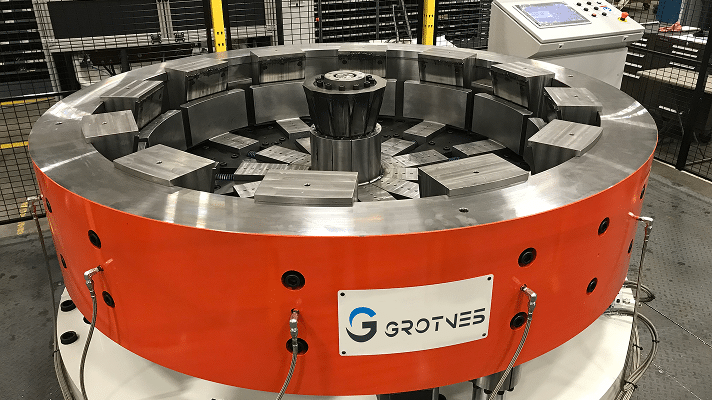
Grotnes shrinkers solve the opposite side of the forming challenge. Instead of expanding a part outward, they apply controlled force from the outside inward to reduce diameter, improve roundness or bring a circular component into specification.
That capability matters in aerospace and defense production because not every part moves out of welding, forming or fabrication at its final size. Rings, cylinders and circular assemblies may need a controlled reduction step to meet fit-up requirements, dimensional targets or downstream assembly needs.
Grotnes shrinkers can help manufacturers address those issues without treating final machining as the only answer. In the right application, shrink forming can reduce the amount of material removed later and give teams more control over the part before final finishing.
Shrinkers as Part of a Larger Forming Strategy
Shrinkers are especially useful when paired with other Grotnes technologies. A component may be roll formed into a circular profile, then shrunk to final size. Another may be expanded and then locally corrected. Another may come from a welded process and require controlled outside-in calibration before inspection.
For defense and aerospace suppliers, this flexibility helps protect production schedules. When the forming strategy accounts for correction and calibration early, teams are less dependent on rework at the end of the process.
Rotary Roll Formers: Creating Circular Profiles with Repeatable Detail
Rotary roll formers are used when a circular part needs more than basic diameter control. These machines form profiles into rings and cylinders, helping manufacturers create detailed cross-sections with controlled geometry and surface quality.
For aerospace and defense production, roll forming can be a strong fit when the part begins as tubing, pipe or a coiled and welded blank, then needs to become a formed ring, cylinder or profiled component. The process can support both longer production runs and shorter, more specialized batches, depending on tooling and machine configuration.
Grotnes rotary roll formers can be designed for different thicknesses, widths and diameters. In some part families, one tooling approach can support multiple diameters when the profile and material thickness remain consistent. That gives manufacturers more flexibility across related programs and replacement-part needs.
Why Roll Forming Matters for Program-Based Manufacturing
In our experience, aerospace and defense programs have rarely behaved like simple commodity production. There may be a need for repeat runs over time, controlled batch sizes, part-family flexibility and reliable setup procedures.
Rotary roll formers can support that environment by helping manufacturers:
- Reduce variation in profiled circular parts
- Improve repeatability across runs
- Support multiple related part sizes
- Reduce tool change friction where possible
- Prepare parts for later expanding or shrinking
- Create controlled profiles before final sizing
When connected to automated handling or downstream forming equipment, a roll former can become part of a more complete production cell rather than a standalone forming station.
Spinning Machines: Forming Rotational Components with Efficient Material Use
Spinning gives manufacturers a way to shape rotational parts by forming material over tooling as the part rotates. For aerospace and defense components that require symmetry, smooth contours or efficient use of material, spinning can be the alternative to machining a shape from heavier stock. This is especially helpful for when materials are costly, lead times are long or the finished part geometry would create unnecessary waste through a subtractive-only process.
Grotnes spinning machines can support the forming of domes, cones, closures, covers and other rotational shapes, depending on the part requirements. The process can bring a component closer to final geometry before additional forming, sizing, trimming or machining takes place.
Spinning as a Preform or Production Step
In some applications, spinning may be the primary forming method. In others, it may create the preform that allows later operations to be more controlled.
A spun part may move to an expander for diameter calibration. It may require trimming, sizing or additional forming. It may become part of a larger assembly. Grotnes helps customers determine where spinning fits into the full workflow so the machine supports the final manufacturing goal.
Built Around the Application, Not Pulled from a Catalog
Grotnes equipment is often applied to parts with unusual forming requirements. The right answer may involve custom tooling, machine orientation, special controls, heating, cooling, automated handling or a combination of several technologies.
That application-first approach is important in aerospace and defense work because the part rarely exists in isolation. It may be tied to a platform, a program, a qualification process, a material requirement or a long-term production schedule.
Grotnes works with manufacturers to evaluate details such as:
- Part size and geometry
- Material type and forming behavior
- Wall thickness and dimensional targets
- Diameter and roundness requirements
- Heat requirements
- Handling limitations
- Tooling access
- Production volume
- Changeover expectations
- Automation needs
- Upstream and downstream operations
This level of planning helps create forming systems that fit the actual manufacturing challenge instead of forcing the customer to work around a standard machine concept.
Talk with Grotnes About Your Next Aerospace or Defense Production Challenge
Bring Grotnes into the conversation early. Share the material, geometry, tolerance requirements and production goals behind your part. Our team can help determine which forming technology, tooling approach and automation strategy best fits the application.
Tell us about your aerospace or defense component and the production challenge behind it.